
|
Gongs have been used for centuries in various cultures for their powerful healing properties. The deep, resonant sounds of gongs can help relax the mind and body, creating a state of deep relaxation. When a person is deeply relaxed, their brain waves slow down, shifting from the beta state associated with normal waking consciousness to the alpha, theta, or even delta states, which are linked with relaxation, meditation, and healing. This transition in brain state can facilitate the body's natural healing processes, helping to reduce stress, improve sleep, and promote overall well-being.
A key element in the effectiveness of gong healing is the presence of a skilled facilitator. A kind and empathetic facilitator can create a safe and trusting environment, essential for participants to fully relax and open up to the healing process. The facilitator guides the session, intuitively playing the gongs to produce the most beneficial sounds for the participants. Their empathy and understanding help to establish a connection with the participants, making them feel comfortable and supported throughout the session. The relationship of trust and safety between the facilitator and the participants is crucial to the success of gong healing. When participants feel safe, they are more likely to let go of their tensions and allow the healing sounds to penetrate deeply. This trust allows them to fully immerse themselves in the experience, facilitating a deeper relaxation and transformation. As a result, the participants can experience profound shifts in their mental and physical well-being, unlocking their body's natural ability to heal itself. By combining the ancient practice of gong healing with the empathetic guidance of a skilled facilitator, individuals can experience a powerful transformation that promotes healing, relaxation, and overall well-being.
0 Comments
In our busy world, we often have to push and strive to reach our goals. While ambition and hard work are important, another path can lead us to our desires without the constant struggle: the path of non-resistance. This means going with the flow of life and trusting the process instead of trying to control everything. Doing this allows us to reach our goals more easily and feel more at peace.
Non-resistance doesn't mean doing nothing. It's about being open and present without the stress of trying to force things to happen. When we stop fighting against the natural flow of life, we make space for good things to come to us. It's about setting our intentions clearly and then letting go, allowing things to unfold in their own time. This way, we can harness the power of intention and alignment instead of sheer force. Living with a non-resistant mindset requires trust and surrendering. It means believing life will work out, even if we can't see how right now. Practices like meditation, sound therapy, mindfulness, and positive affirmations can help us stay connected to the present moment and our inner selves. These practices keep us calm and clear-headed, making it easier to notice and take advantage of opportunities when they come. This relaxed state of mind reduces stress and helps us attract positive outcomes. The benefits of non-resistance are significant. When we're not wasting energy resisting and trying to control everything, we can focus on what matters. This shift lets us enjoy life more and stay open to unexpected opportunities. By embracing non-resistance, we invite ease and flow into our lives, making room for success and happiness to come to us in ways we might not have imagined. Letting go, surrendering and trusting life's natural rhythms allows things to flow towards us effortlessly. Have you ever noticed how a soft melody or the gentle hum of a singing bowl can make you feel calm and relaxed? These experiences give us a glimpse into the amazing world of sound healing, a practice rooted in the science of resonance, frequency, and vibrational medicine. Let's take a journey to discover how sound can be a powerful tool for healing.
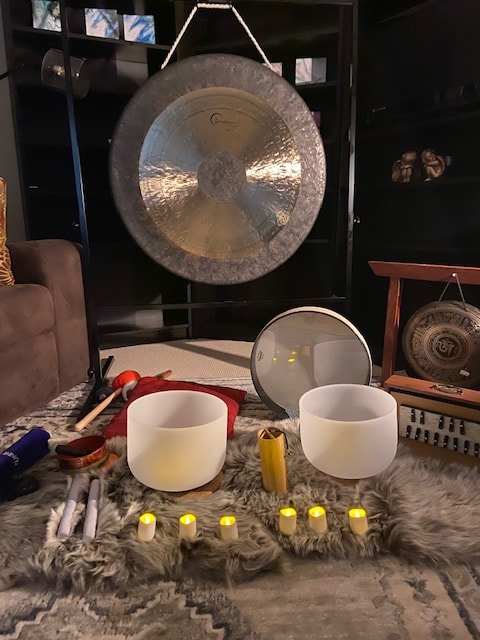
At the core of sound healing is resonance, where one vibrating object can influence another to vibrate in harmony. When we listen to certain sounds or frequencies, our bodies naturally respond by syncing up with those vibrations. This harmony creates a sense of balance within us, promoting healing on physical, emotional, and even spiritual levels. But there's more to it than just harmony. Sound healing also works through frequency and brainwave entrainment. Each sound has its own unique frequency, which can affect our brainwaves and mental state. Exposing ourselves to specific frequencies can achieve desired mental states like relaxation, focus, or even increased creativity. Studies have shown that sound vibrations can have profound effects on our bodies, reducing stress, easing pain, and improving overall well-being. From ancient traditions to modern discoveries, the evidence for the healing power of sound continues to grow. As we explore the science behind sound healing, we uncover its incredible potential. Whether it's the gentle tones of Tibetan singing bowls, the incredible gongs, the rhythmic beats of a drum, or the soothing melodies of a flute, sound has the ability to heal and transform us. So, the next time you need a moment of peace or renewal, consider turning to the healing power of sound. After all, the universe is full of vibrations—let's tap into them and embrace the healing frequencies around us. Living with chronic pain can be a daily struggle, affecting everything you do in life. While traditional treatments offer some relief, a different approach might help: sound healing. Sound healing, a centuries-old practice that utilizes sound frequencies and vibrations, has emerged as a promising avenue for chronic pain relief. By using the power of sound therapy for pain, individuals can experience natural pain relief and improved overall well-being. Sound therapy for pain management involves using sound frequencies to target areas of discomfort. These vibrations go deep into the tissues, helping to relieve tension, reduce inflammation, and promote relaxation. Vibrational healing methods have the potential to address chronic pain and offer long-lasting relief by balancing the body's energy. One of the key benefits of sound healing for pain management is its ability to address the root cause of the pain rather than simply masking the symptoms. Sound therapy reduces pain over time by addressing internal healing through imbalances in the body's energy system. Furthermore, many people discover that sound healing improves their general quality of life by lowering stress, promoting sensations of well-being, and enhancing sleep. In conclusion, sound healing offers a gentle solution for chronic pain relief. By tapping into the body's natural healing mechanisms through sound therapy, individuals can experience great improvements in their pain levels and overall quality of life. Whether you're seeking natural pain relief or looking to complement your existing treatment plan, consider exploring the transformative effects of sound healing for chronic pain management.  Have you ever wondered about the magic behind chanting "OM" during meditation or yoga? Well, it turns out, it's not just a soothing sound – it's a key that unlocks the potential of your crown chakra, the energy center at the top of your head. "OM" has a unique vibration that syncs up with the crown chakra's energy. When you chant it, you're tuning into the same frequency, creating a sense of balance and alignment in your spiritual energy. But it's not just about vibes; chanting "OM" is like an energy booster. The rhythmic repetition of this simple sound wakes you up, clears your mind, and sharpens your focus. This could be your go-to practice if you're looking for mental clarity and a brainpower boost. Beyond its energizing effects, chanting "OM" is a form of meditation. As you repeat this sacred sound, you're not just making noise but taking a journey within. The sound becomes a guide, leading you to a peaceful and centered state, making it a great way to find your inner zen. One fantastic perk of chanting "OM" is its ability to kick negativity to the curb. The vibrations don't just align your chakra; they also shake off any bad energy hanging around. It's like hitting reset on your spiritual energy, making room for positivity and light. So, whether you're into meditation, yoga, or just looking for a quick soul refresh, give "OM" a try. Chant it, feel the vibrations, and let it guide you to a place of calm and spiritual awakening. It's a simple practice with some serious transformative potential. 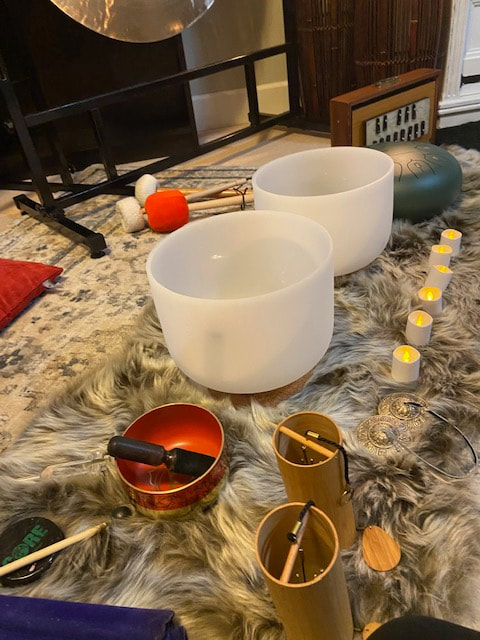 Have you ever felt like life has wrapped you in layers of expectations, stress, and conditioning? It's easy to lose sight of our true selves amid the hustle and bustle. Enter the gong – a mystical instrument that's more than just music; it's a journey inward. This is why I love playing my gongs for myself and others. Imagine the gong as the gentle hands peel away the layers of an onion. With each resonating sound, it works its magic, shedding the accumulated layers that may not serve you. It's like an emotional detox, freeing you from the weight of societal norms, past experiences, and self-doubt. As the gong rumbles, you might feel a subtle shift within. It's as if you're unraveling the stories you've told yourself and those that society has written for you. The gong's vibrations go beyond the surface, delving deep into your being to touch the core of truth and reality – the essential you. The gong provides a space for authenticity in a world that often encourages us to wear masks and conform. It's a cosmic dance where you and the sound become one, and the layers of conditioning fall away, leaving behind the unfiltered, raw essence of who you are. This ancient practice isn't just about sound; it's about self-discovery. With each resonant wave, the gong invites you to embrace vulnerability, release what no longer serves you, and reconnect with the pure, unadulterated truth that lies at your core. So, the next time you find yourself craving a reset, consider the gong – your companion peeling back the layers and rediscovering the essence of you. It's not just a musical experience; it's a journey to your innermost self, where the real magic happens. Contact me for more info at [email protected]. 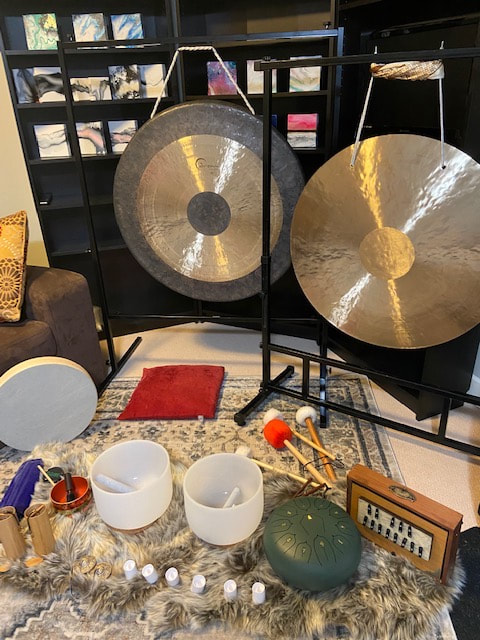 Lately, my artistic journey has hit a little block. The unfinished canvases in my studio echo the chaotic vibes of the world around us. It's been a struggle between my creativity and the energies swirling around the world. In times like these, I've always turned to my trusty rituals – a dance with sage, the beautiful smell of palo santo, and the resonant hum of the gong. There's a profound connection between these cleansing rituals and the energies surrounding us, which goes deeper than we might realize. So I use sage to cleanse negative energies, use Palo Santo to add positive energy, and the gong to generate deep relaxation, reduce stress, and release physical tension. Frequencies and energies are like hidden dimensions, and we're just starting to scratch the surface of their potential. The world of sound healing is a vast, uncharted territory, and it's both thrilling and daunting to think about the possibilities that lie beneath the surface. It's like we're standing on the edge of a creative frontier, ready to unravel the mysteries that sound and energy hold for us. In the midst of global chaos, I can't help but see the world as a canvas, waiting for intentional strokes of transformative frequencies. Exploring this realm gives me a sense of comfort and a glimpse into the immense power that sound and sound healing might have in our lives. Take a moment to listen to this song. The energies are high out there and I am sure we carry other people’s energies in our aura. Time for a clearance. Gongs have this fantastic ability to take us to a different place, one where time feels like it's not in a rush. These circular wonders have significantly influenced my spiritual practice and how I facilitate sound baths. When you hit a gong, it's not just about making a sound; it feels like you're opening a door to a space where time slows down. Consider gongs more than just instruments – they're like pathways guiding us into a realm where every moment holds importance. When the vibrations from the gongs fill the air, it's not just noise; it's like stepping into a whole different world, inviting us to be completely present and soak in the richness of the moment. What makes the experience intriguing is the silence that comes between each note, each strike of the gong. It's not just any silence; it's deep and meaningful. In those quiet moments, there's a language that doesn't need words, a space that encourages us to think and reflect. It's like the gong is communicating through its sound and the pauses, the moments of quiet. This interplay between sound and silence is more than just a musical thing; it's a profound journey into the core of existence. The gong becomes a tool for mindfulness, a way to transport us into the present moment. In those silent moments, we're not just hearing the absence of sound; we're diving into a stillness that invites us to explore our thoughts and feelings. So, when we come across the captivating sounds of gongs, it's not just about listening to music; it's like entering a space where time takes a pause, and the language is both heard and felt in silence. It's a journey that goes beyond simply hearing – it's a dive into the depths of our consciousness, guided by the beautiful sounds of gongs and the meaningful silences in between. It's pretty incredible. The healing effects of gongs are associated with several factors:
In the last few years there has been an unmistakable interest and growth in sound healing: gong and sound baths. What was once thought of as a niche healing modality has become a much-loved and widely appreciated practice. Just as yoga was over a decade ago, sound healing has emerged as an impactful way to enhance one's overall well-being. Sound healing's rise in popularity can be caused by a few factors. First, people seek holistic approaches to health and wellness, and many of my friends (and myself) are choosing an alternative approach to health issues. Sound healing offers a unique and deeply immersive experience that addresses physical health, mental and emotional balance. The powerful sound of gongs and other sound instruments can create a deep sense of relaxation, reduce stress, and promote inner harmony. Also, sound healing has found its way into wellness centers, spas, yoga studios, and even mainstream healthcare settings as a complementary modality for stress reduction and pain management. The broader acceptance of the mind-body connection can also explain the growth of sound healing. People are more aware of the interplay between mental and physical health, and sound healing provides a holistic avenue for addressing both. Whether you're drawn to the healing vibrations of gongs, singing bowls, or other instruments, sound healing continues to grow and adapt to meet the needs of those seeking greater harmony and well-being. If you want to see how and why it works, sign up for a sound bath with me!  In the early mornings, as the world starts coming to life, I find comfort in rituals that stimulate my soul. Lately, I've saged my place daily now (three days) and it helps! The scent of sage fills my space, cleansing away the heavy energies that have bled through the world's cracks. It's become a very much needed shield against the weight of uncertainty and my own moments of melancholy. This morning, I indulged in a sound bath, letting the sound of my gongs wash over me like gentle giants. The vibrations harmonized with the rhythms of my soul. This practice is a sanctuary, a way to ground myself and connect with the universe's beautiful frequency. During these times of great injustice, it becomes easier to channel the deep well of love within us for the innocent souls in the world. My heart chakra opens right up in these moments, compassionate and understanding. Like many, I've learned that nurturing my heart chakra is a continuous journey. It's a part of me that needs extra care, I have noticed. My heart sometimes closes quickly as I don't want to experience another heartbreak. Amidst the world's chaos, these practices become my lighthouse, guiding me back to a place of peace and teaching me that even in the darkest of times, the power of self-love and spiritual connection is what I have to focus on. It changes the vibe around us when we are in the frequency of love. I will continue this journey more steadily.  Imagine for a moment that we are all like tuning forks, vibrating with a unique frequency that radiates from our very core. Often very impactful, this energy extends outward, influencing the people and environments we face. Just as a tuning fork's vibrations can resonate with others, so too can our frequencies affect those around us. The beauty of this metaphor lies in its reminder that we possess the power to shape the energies we emit. When we cultivate positive thoughts, emotions, and intentions, we generate harmonious vibrations that resonate with those we meet, creating a ripple effect of positivity. Conversely, allowing negativity to cloud our energy can disrupt the frequencies of others and contribute to discord. Recognizing our role as tuning forks in the symphony of life encourages us to be mindful of the energy we project. It encourages us to grow our inner harmony, radiating the frequencies of love, compassion, and empathy, which elevate our well-being and contribute to the collective frequency of the world around us. In this way, we can create a more harmonious and compassionate world, one vibrational frequency at a time. 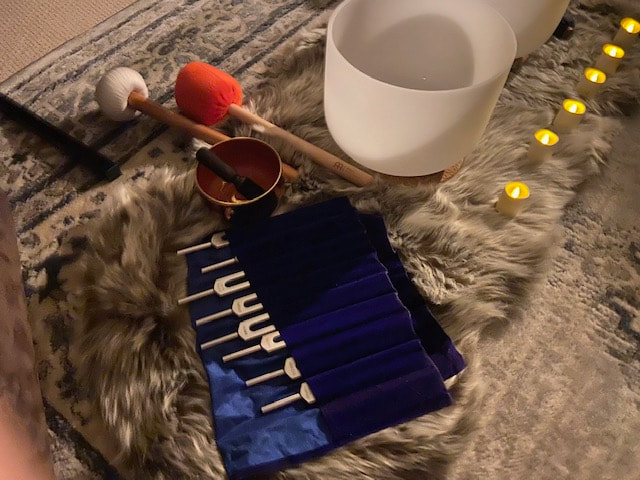 I have always been open to exploring alternative healing modalities. I got my first set of tuning forks and crystal bowls in 2013, which I used on myself and my friends. I was clearing the chakra points on people. Still, it wasn't until I stumbled upon sound healing and color therapy that I truly felt a profound shift in my life. At the time, like many others, I grappled with the challenges of lockdowns and the world's uncertainty. During those days, I realized that my alcohol consumption had started to creep up. I was turning to wine more frequently as a way to cope with the stress and isolation that had become our new reality. I knew I needed to make a change, so I decided to try the harmonic egg out. Before the treatment, I took a moment to jot down my intentions, and at the top of the list was my desire to address my relationship with alcohol. I was ready to cut down on my wine intake. The experience itself was unlike anything I had ever encountered. Surrounded by the gentle vibrations of sound and immersed in a sea of colors, I could feel a shift within me. It was as if the sound waves gently untangled the knots of stress and anxiety. Something incredible happened in the weeks and months that followed that transformative session. I realized I hadn't touched a drop in seven months. I couldn't help but smile when I passed a liquor store, knowing I had regained control over my life. The sound and color healing had strengthened me to prioritize my well-being and make choices that supported my highest good. Looking back, I'm thankful for the power of sound and colour therapy. They became the guiding lights that led me to a place of healing and self-discovery and that's when I got my instruments, gongs, chimes, shruti box, drums, rain sticks, Tibetan bowls and you name it, including completing a certificate as a sound healer/practitioner. I want to share this modality with others as it worked so well for me. It's a reminder that sometimes, the most profound transformations can begin with a simple intention and a willingness to explore the depths of our healing potential.  Caring for our mental well-being has never been more critical in our unhinged and uncertain world. While various methods and techniques exist to improve brain health, one increasingly popular approach is gong baths. Far from literal baths, gong baths involve immersing oneself in gongs' soothing sounds and vibrations, offering a unique and refreshing experience for the mind, body, and soul. I have two gongs and I am obsessed about them-love playing them. What are Gong Baths? Gong baths are a form of sound therapy used for centuries to promote relaxation and healing. During a gong bath, participants lie down in a comfortable position while a gong master plays the gong. The gong's resonating sounds create a meditative and deeply calming atmosphere, washing over the participants like gentle waves. The vibrations produced by the gong are said to positively impact the brain and help alleviate stress anxiety, and even promote better sleep. The Brain-Boosting Benefits:
Incorporating Gong Baths into Your Routine: Integrating gong baths into your brain health routine is simple and rewarding. Seek local sound healing practitioners or wellness centers offering gong bath sessions. Alternatively, some online resources and recordings allow you to experience the benefits from the comfort of your home.
|
Annica JohanssonMy name is Annica Johansson and I am an Art Life Coach, Certified Sound Healer and Artist. I am writing about personal development, daily musings, spirituality and depicting mother nature's amazing beauty. Welcome! Categories
All
Archives
July 2024
|




 RSS Feed